
Summer 2026
Pocket-money publishing
R. B. Talbot Kelly
various illustrators
Dora Carrington
Hilary Stebbing
S. R. Badmin
Richard Chopping
Sheila Jackson
Noel Carrington: Nothing Need Be Ugly
The Higgins Bedford, Castle Lane, Bedford. Curated by Joe Pearson (Design for Today). Exhibition design by Victoria Partridge. 15 November 2025 – 2 September 2026. Reviewed by Clare Walters
In December 1940, when Britain was in the early throes of the Second World War, publisher and editor Noel Carrington (1895-1989) launched Penguin’s Puffin Picture Books. These small paperbacks, aimed particularly at evacuees, gave wartime children access to beautifully illustrated, colourful books on a wide range of subjects at a pocket-money price.
This absorbing exhibition, curated by Joe Pearson, author of Drawn Direct to the Plate: Noel Carrington and the Puffin Picture Books (Penguin Collectors Society), documents the life and work of this influential publisher, from his early years at Oxford University Press in India, through his time as Books Manager at publishers Country Life, to the launch of Puffin Picture Books and beyond. On display are 120 titles from the Puffin series, plus many other items from across his career.
Carrington was born in Bedford and the start of the exhibition describes his early life. He believed that ‘nothing need be ugly’, and in 1925 he joined the Design and Industries Association. Later he became a committee member of the Council of Industrial Design and the Double Crown Club.
This strong interest in design led to Carrington’s wish to develop quality children’s books, which he did first while at Country Life, publishing High Street by J. M. Richards and Eric Ravilious, and Kathleen Hale’s Orlando The Marmalade Cat. He had been influenced both by the Russian picturebooks of the 1920s and the French Albums du Père Castor series of the 1930s, many of which featured émigré Russian illustrators.
In 1938, at a meeting with Penguin’s founder Allen Lane to discuss a book on design, Carrington floated his idea for an inexpensive series of attractive children’s books. To Carrington’s surprise, Lane was enthusiastic, saying if he could produce them in colour, for just sixpence, he would support the idea.
Carrington personally selected the artists and, together with Geoffrey Smith from printers W. S. Cowell, he worked on trial designs and costings. Their idea was to print more cheaply using auto-lithography, a method whereby artists could draw directly onto the plate.
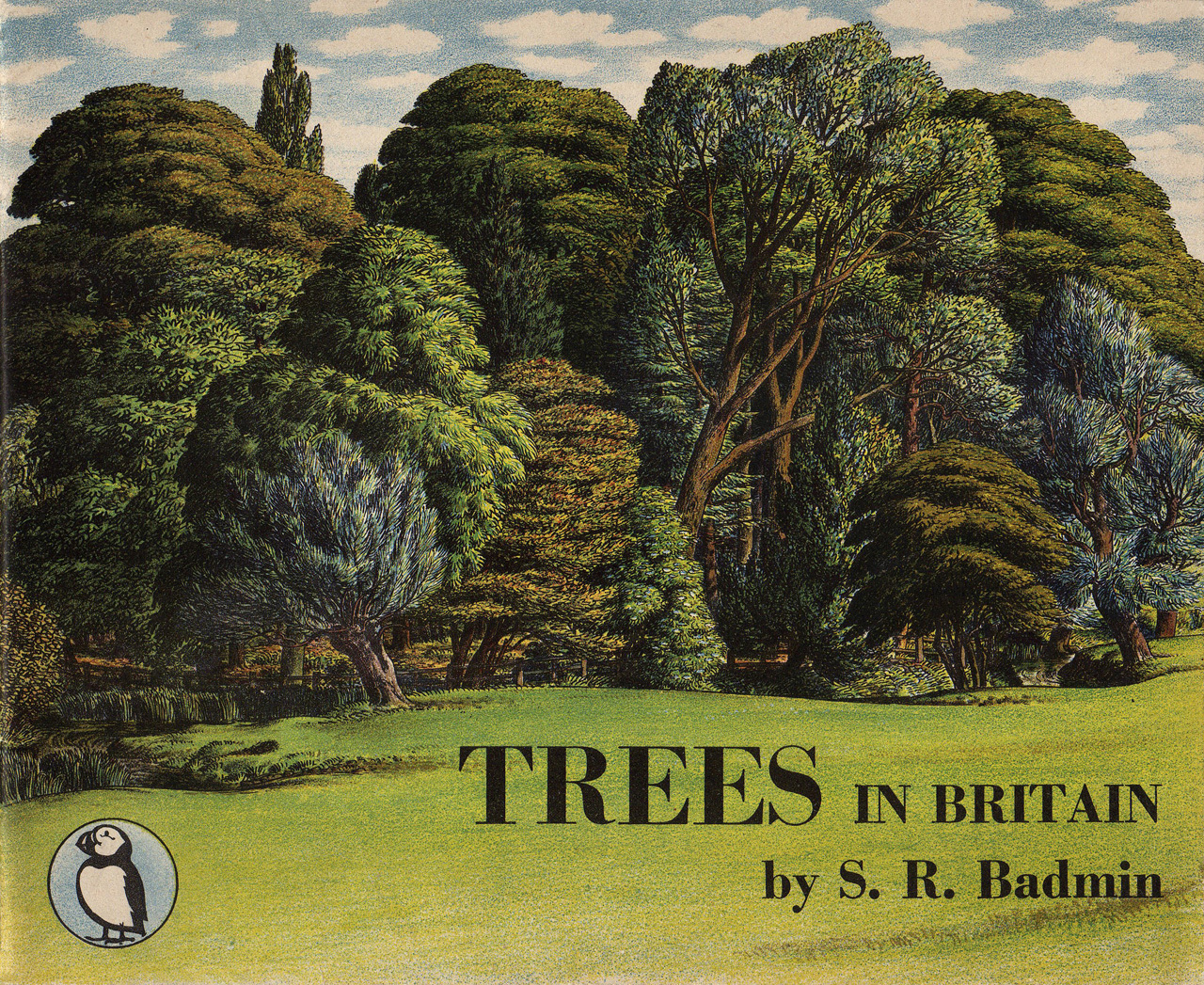
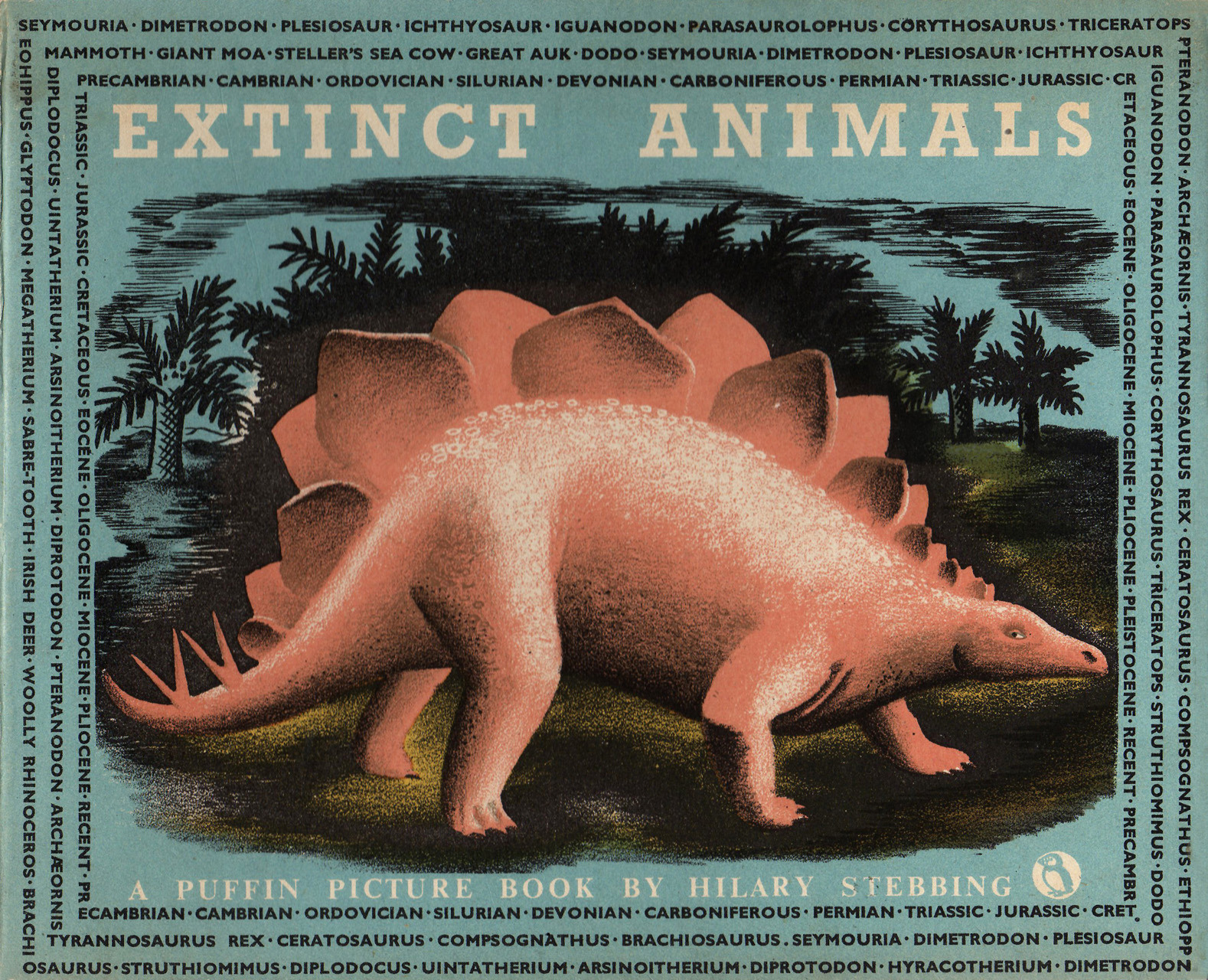
Extinct Animals (1946) by Hilary Stebbing (1915-96). Stebbing had earlier illustrated Pantomime Stories for Puffin Picture Books. Top. Trees in Britain (1943) by S. R. Badmin. This book was described by David Thomas in the 1962 Penrose Annual as ‘one of the most beautiful illustrated books of this century.’
When war erupted in 1939, both Lane and Carrington felt the first Puffin Picture Books should support the war effort. So they launched with four war-themed titles: War on Land, War at Sea, War in the Air and On the Farm. These books, on display here, were instantly popular and, despite the dual challenges of rising prices and paper control, the list expanded the following year to include books on nature, trains, nursery rhymes (illustrated by Clarke Hutton, head of lithography at the Central School of Arts) and a second Orlando book by Kathleen Hale, Orlando’s Evening Out.
Carrington, often tipped off by Hutton, would go on to commission many young debut artists, such as Hilary Stebbing, Richard Chopping and Sheila Jackson, and works by these artists can be seen here. One of Puffin’s star artists was Stanley Roy Badmin, a skilled landscape watercolourist. He illustrated the stunning Trees in Britain and the architectural book Village and Town.
In 1943 Baby Puffins, half the size of the Picture Books, arrived, with an alphabet book and a counting book by Dorothy Chapman, as well as other rhyme and story titles. Postwar, Puffin focused on non-fiction, with subjects including history, geography, science, transport, hobbies and crafts such as woodworking and pottery, and sports such as swimming, sailing and cricket.
The Cut-out Books, whereby children could cut out and glue sections to construct 3D models, was another innovative idea. A vitrine in the exhibition displays several rare, fragile made-up elements of R. B. Talbot Kelly’s Paper Birds, as well as zoo animals, a toy theatre and the cover of the later press-out book Noah’s Ark by John Miles.
Carrington retired in 1956, after 37 years in publishing, to focus on his Berkshire farm. In the 1970s, he revived the career of his late sister, artist Dora Carrington, producing a book about her: Carrington: Paintings, Drawings and Decorations. Two of her oil paintings – Mrs Box and Spanish Boy, the Accordion Player – can be seen in the exhibition.
Puffin Picture Books continued until 1965, the final publication being Seashore Life. This comprehensive exhibition offers a visual feast of many covers, spreads and artwork from this vibrant British series that brought affordable quality books to a wider audience of young people. It is well worth a visit.
Clare Walters, writer and editor, wordlessbooks.com, London
First published in Eye no. 110 vol. 29, 2026
Eye is the world’s most beautiful and collectable graphic design journal, published for professional designers, students and anyone interested in critical, informed writing about graphic design and visual culture. It is available from all good design bookshops and online at the Eye shop, where you can buy subscriptions and single issues.