
Summer 2024
Anita Klinz: The first Italian art director
Over two crucial decades at Mondadori, designer Anita Klinz transformed the look of Italian book publishing. Luca Pitoni tells her story
Anita Klinz was born in 1923, in Abbazia, now the Croatian coastal town Opatija. It was then part of Italy, though still deeply Austro-Hungarian in cultural terms. Klinz was the daughter of Carmen Vio and Giuseppe Klinz, a doctor, and her full name was Anna Maria Leucodia Klinz. Her father moved to Prague to work, taking the family with him when she was two years old, though she returned every summer for the holiday. In Prague, she attended German-speaking schools: primary school, Realgymnasium, a school of economics and finally two years at the Bohemian-language Štěpánská school of graphics.
Life in Prague was dramatically interrupted by war and in February 1945 the Klinzs’ home was bombed. When the family tried to leave, Giuseppe was arrested (as an Italian citizen) and thrown into a prisoner-of-war camp for two years.
A few months after the Liberation, Klinz found jobs as a governess and translator, then for a year as foreign correspondent at the central Credito Italiano offices in Piazza Cordusio, Milan. Then she was taken on at the publishing house Dea, where she worked as compositor and illustrator for the launch of the magazine La Vispa Teresa in 1947, a ‘Saturday weekly for big girls and little women’, and freelanced as an illustrator.
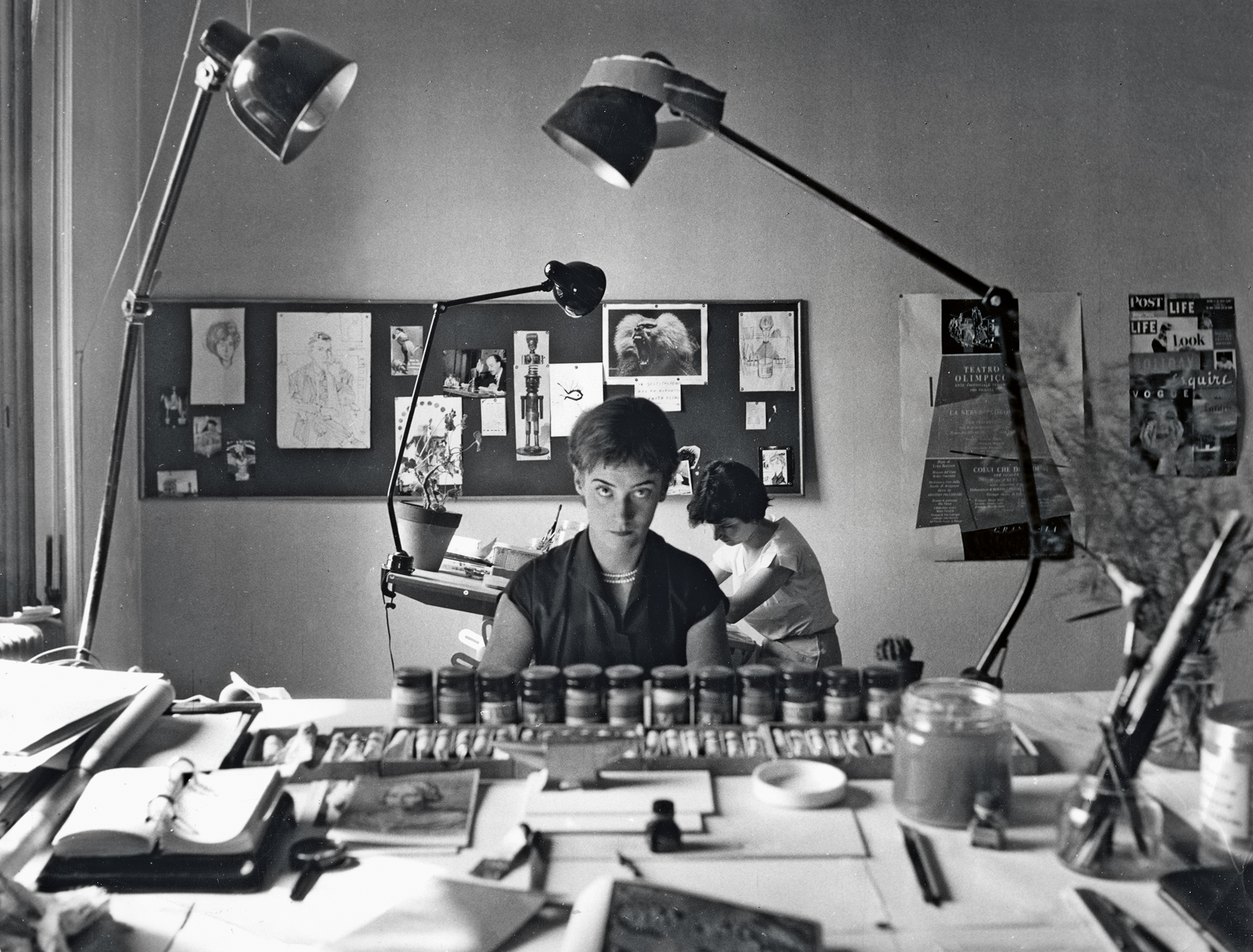
‘I Gabbiani’ series, il Saggiatore, 1964-69. Top: Anita Klinz sitting at her work table in the graphics department of the Mondadori publishing house where she was the Art Director for two decades. Portrait of Klinz, 1960s, courtesy Nicoletta Vio Petrini and Fondazione Arnoldo e Alberto Mondadori. Photographer unknown.
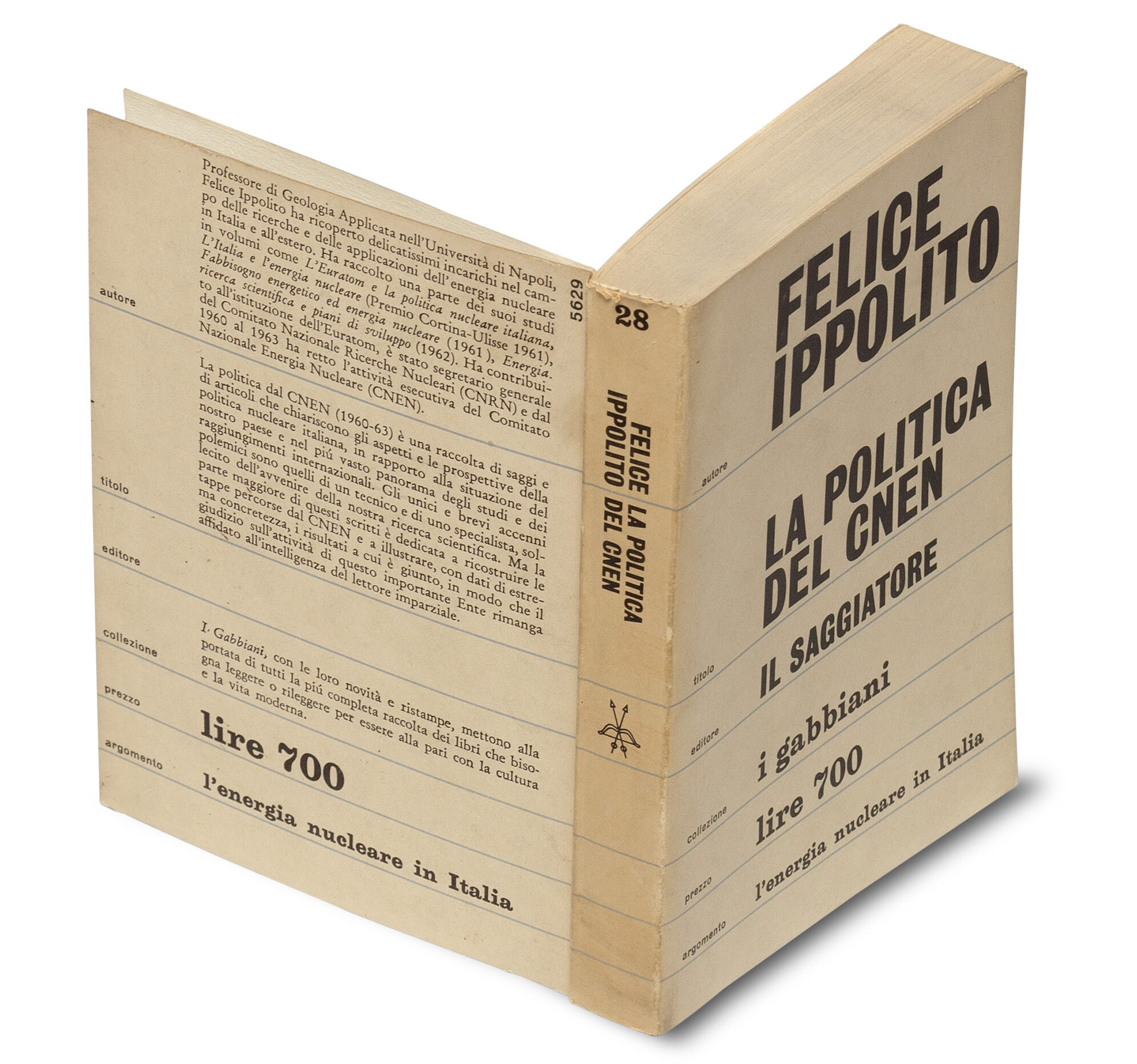
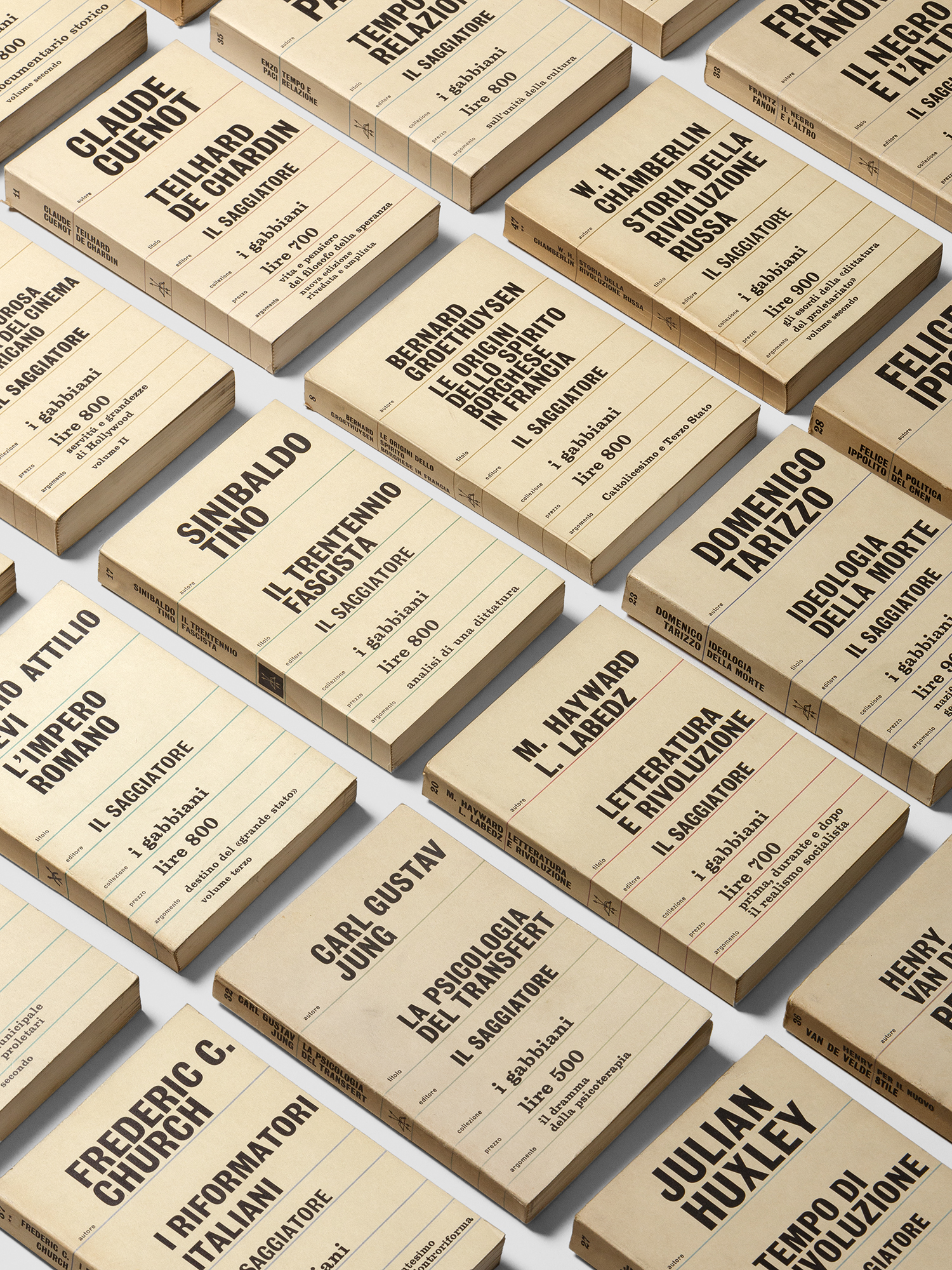
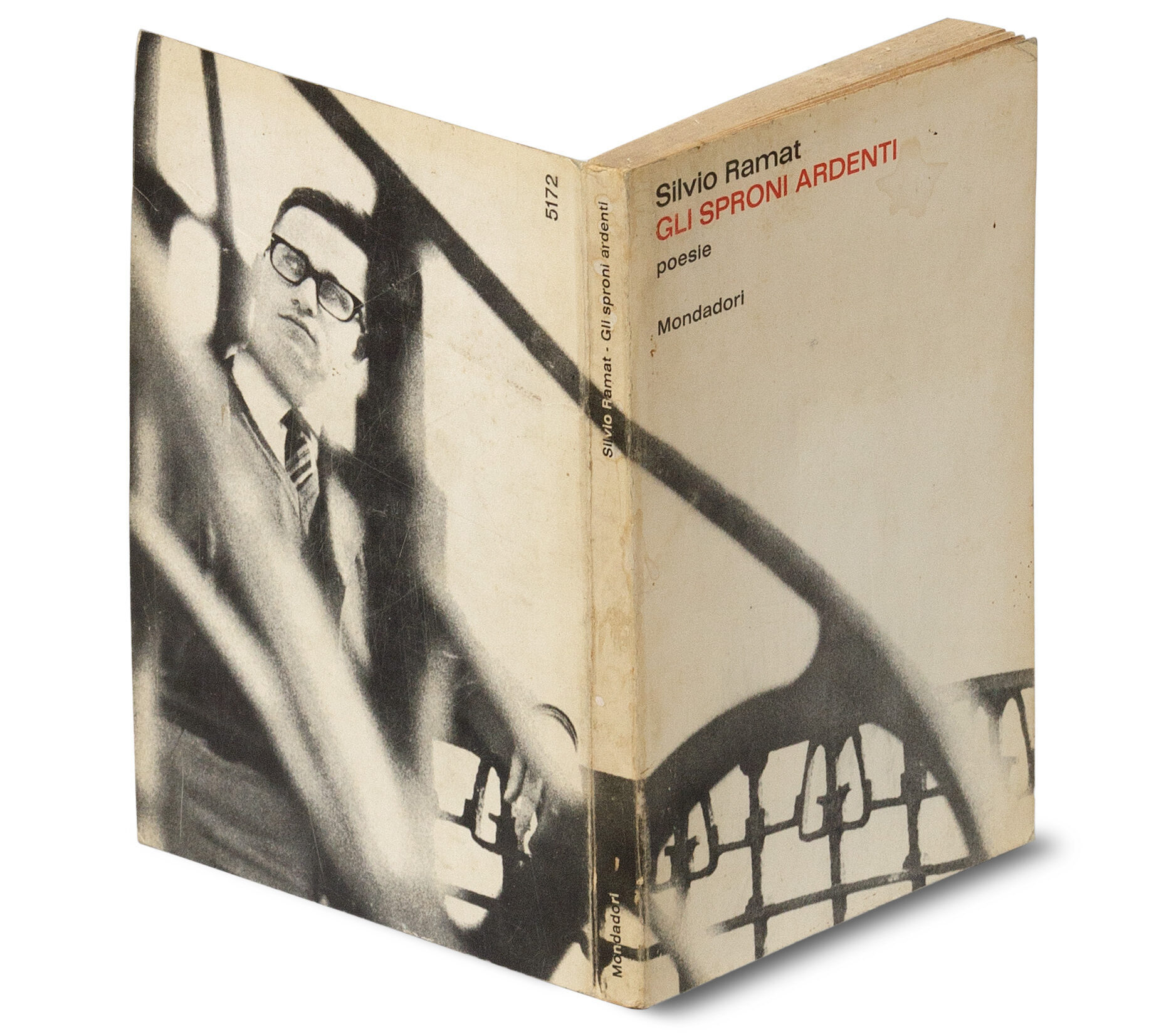
The first series was produced on ivory paper with black typography and silver rules. The enclosing rules make the entire composition, including spine and back, into a kind of bibliographical record. Typeset in Grotesque No.9 Bold, Egizio Bold and Garamond.
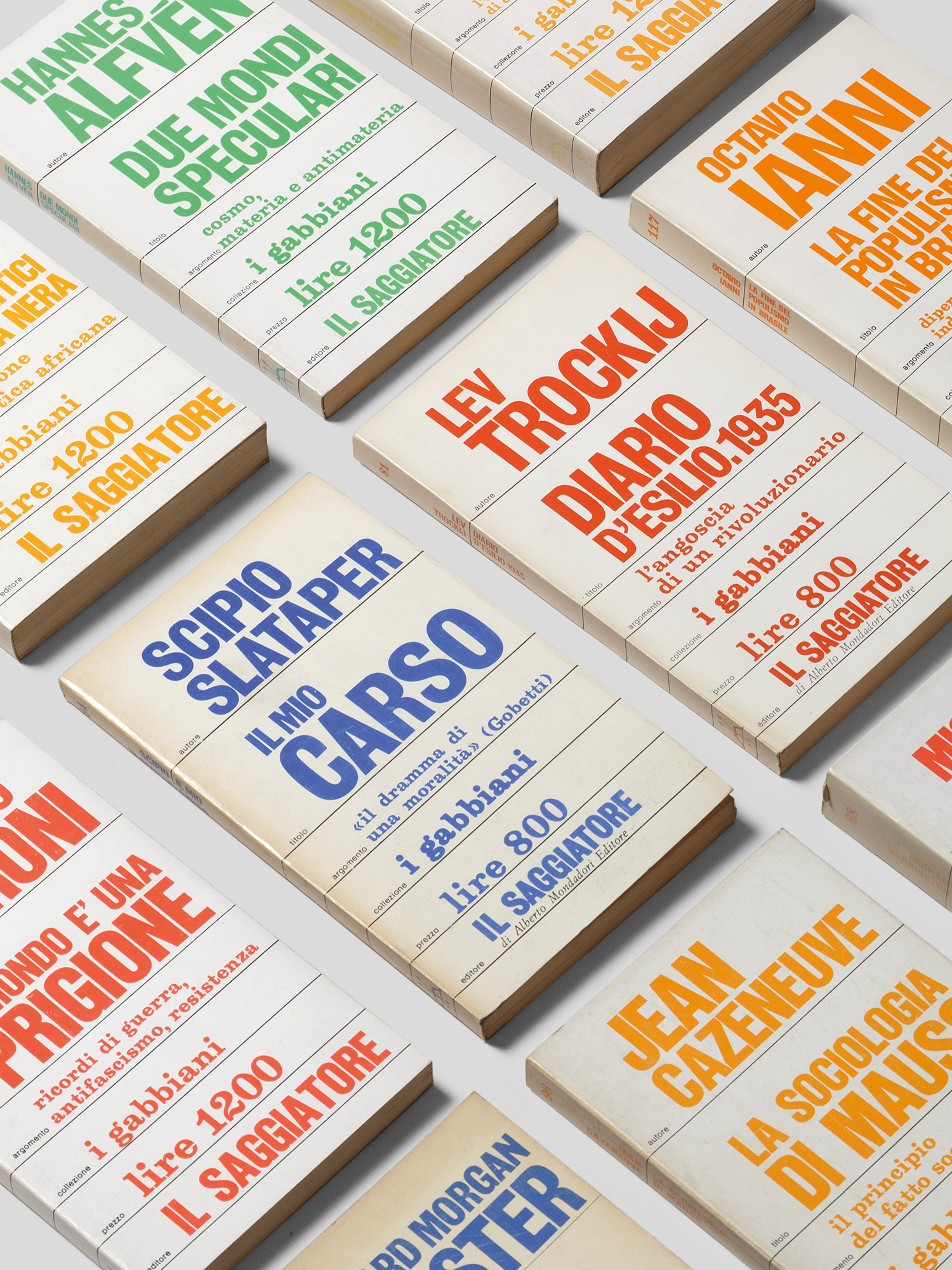
Starting in the early 1970s, the new ‘I Gabbiani’ series used coloured type to denote subject matter: history, philosophy, humanities in yellow; biographies, documents, current affairs in red; literature in blue; natural sciences in green; various works in black. This was a budget series in a small format, with low quality paper, but with a high standard of editorial content. All still life photography by Louis De Belle.
In 1951 Klinz was hired by Mondadori to join the staff of Epoca, where she met the weekly’s art director, Bruno Munari. As she would say, ‘He gave me lessons in living and in creative fantasy’. When she transferred to the books division she had the chance to work with the great artist and designer Fulvio Bianconi, another source of inspiration.
By that time Mondadori, founded in 1907, had become the biggest publisher in Italy, printing everything from pulp fiction to encyclopedias, plus popular magazines and highbrow journals. Klinz worked there at a time of great expansion – by the mid-1960s there were more than 3000 employees. In 1975 the firm moved to a grand headquarters in Segrate designed by architect Oscar Niemeyer.
She quickly became an indispensable part of Mondadori’s business. In 1953 Klinz was asked to work on the publisher’s new, own-brand bookstore. In a letter to Klinz, Arnoldo Mondadori was effusive in his praise: ‘Dear Signorina, Alberto [Mondadori] has described your tireless dedication in directing the work on the store, and your permanent dissatisfaction with the results until they have reached your design’s heights of perfection. This all comes through in the colour schemes and well matched contrasts, and in all the genial ideas that arouse the admiration of whoever comes into our store. If I hadn’t had someone to work with whose zeal can only be compared to that of architect Mazzoni, there’s no way that this difficult undertaking to design, transform, decorate and open a shop in a venue that a month ago was bare boards could have been done in such a short time.’
‘Il Tornasole’ series, Mondadori, 1963-68. Graphic design by Anita Klinz and Ferruccio Bocca. Photographs by Vittorio Bobbi.
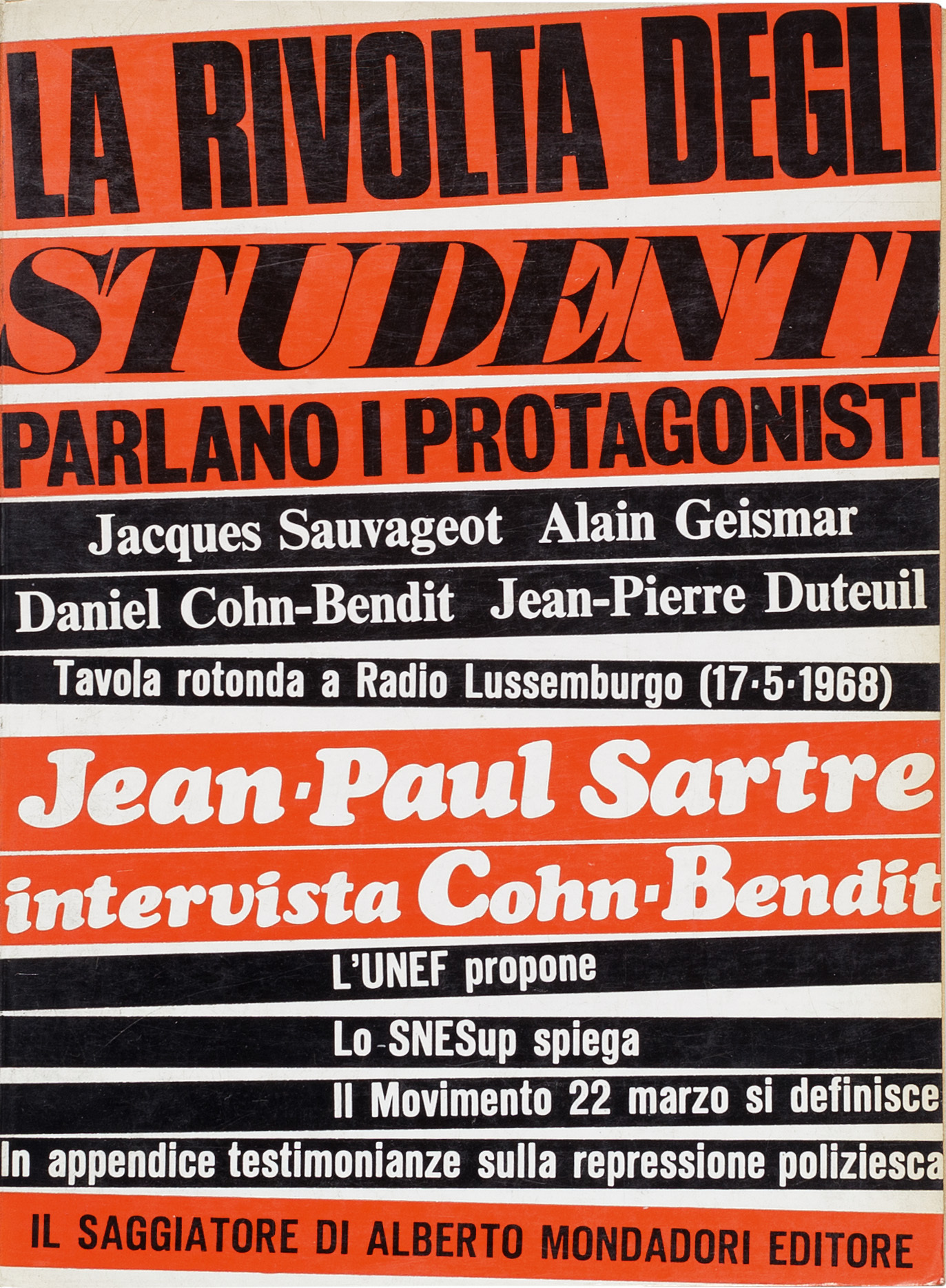
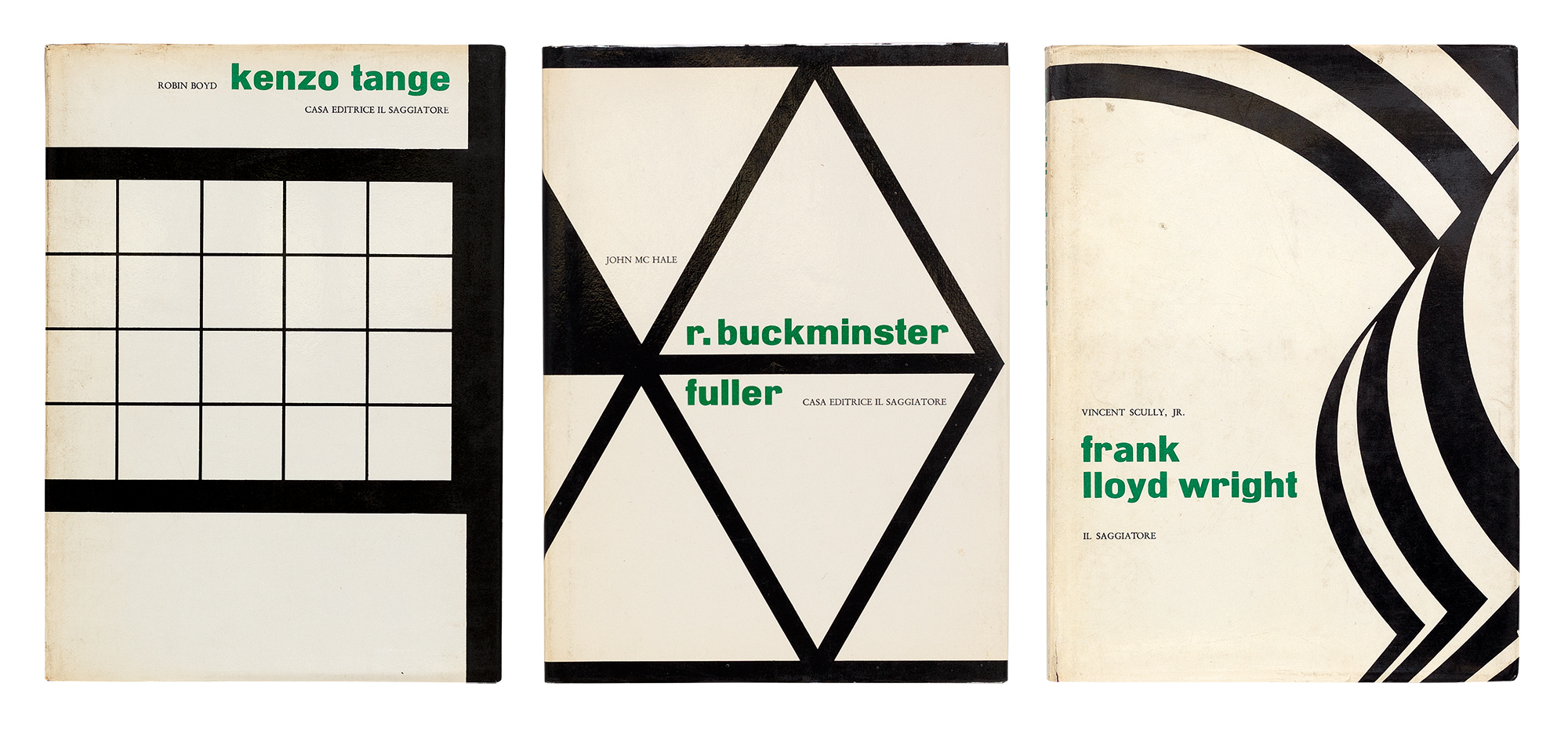
She worked for the company as designer and art director and in 1958 joined the team that Alberto Mondadori assembled to launch the il Saggiatore imprint, which over the subsequent decade published many important works of literature, scholarship and information. The Enciclopedia della Civiltà Atomica (1959-60), Klinz’s suggestion, the series ‘Maestri dell’Architettura’ (1960-64, with its rigorous, systematic dust jackets that concealed a single-colour illustration on the Imitlin-covered book inside) and the low-cost, typographic ‘I Gabbiani’ series (1964-80) are ‘radical’ approaches that demonstrate Klinz’s ability to manage identity and variety within a book series. Leonardo Sonnoli compares Klinz’s cover for La rivolta degli studenti (1968) to the cut-up type of Jamie Reid’s graphics for the Sex Pistols.
However, as Mario Piazza writes, ‘Between 1959 and 1968 her works were shown with a certain regularity in the yearly Pubblicità in Italia volumes published by L’Ufficio Moderno. They made the odd appearance in magazines, in an article in Linea Grafica and little more. Beyond these testimonials, her activity was almost totally overlooked in the criticism and history of graphic design of the time.’
La rivolta degli studenti: parlano i protagonisti, ed. Hervé Bourges, il Saggiatore, 1968. Cover by Anita Klinz and Guido Carrer. With these typographic variations on coloured bands, Klinz interprets the anarchic spirit of the silkscreens or mimeographs of the workers’ and students’ revolts of 1968.
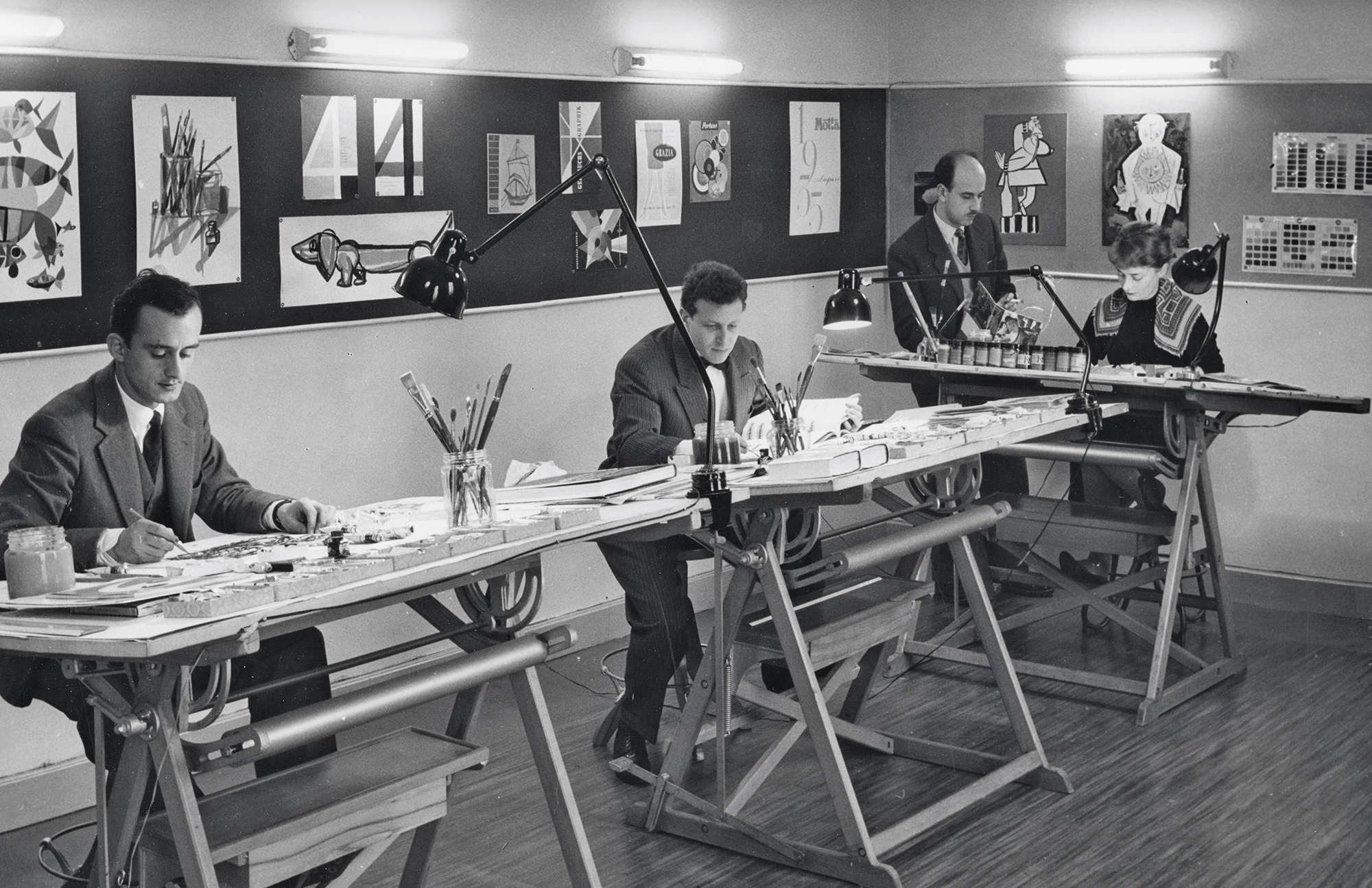
Anita Klinz in the design office of Mondadori. From the left, Ferruccio Bocca (designer), Bruno Binosi (designer) and Guido Lopez (head of Mondadori Press Office).
By 1965, Klinz was at her peak. Three years earlier she had become an executive at Mondadori, as art director for the publishing sector. She knew she was good, she knew that Alberto Mondadori had unconditional faith in her.
Even when she found herself designing Mondadori’s two most commercial series, ‘Gli Oscar’ paperbacks and Urania magazine, Klinz always stubbornly pursued beauty.
Klinz was the unflinching head of a group of sixteen artists / graphic designers, almost all of them men with big personalities. She chose nearly all of them, constantly monitoring them. She guided them like a coach, egging them on, giving each person a role, always putting the team before the single player. A handwritten diary reveals how she assessed her team.
‘Arnaldo, age 26 mediocre, no feel for the job.’
‘Ottavio, not bad but as usual ill-equipped and trite.’
‘Whenever a “real”, “quick” drawing is needed, we always go to [Ferenc] Pintér; his talent is truly remarkable even though his taste at times is a bit old-fashioned. But his talent for colours is perfect […]. He doesn’t have much of a feel for typography, he’s more for typesetting posters than columns or boxes.’
About Ferruccio Bocca, a mainstay of her work group, Klinz wrote:
‘The “typographical” part suits him less and so often it becomes a sort of “team” work. This system is generally applied to everyone: e.g. Bocca or Binosi come up with an idea, Pintér makes the illustration (or Bocca takes the photo), another deals with the text, etc. This system came about spontaneously, owing to requirements and without causing any conflict or jealousies, it leads to more varied and broader results, by making the most of each person’s best skills.’
All the covers and two spreads from L’Enciclopedia dei ragazzi [The Children’s Encyclopedia], Mondadori, 1964-66. These twelve volumes, with 10,000 illustrations (photos and drawings) were created almost entirely by a special team led by Anita Klinz and Peter Gogel, winning Klinz many international awards. In a striking visual synthesis, all the covers led back to the shape of a circle, an abstraction that was not only formal but conceptual.
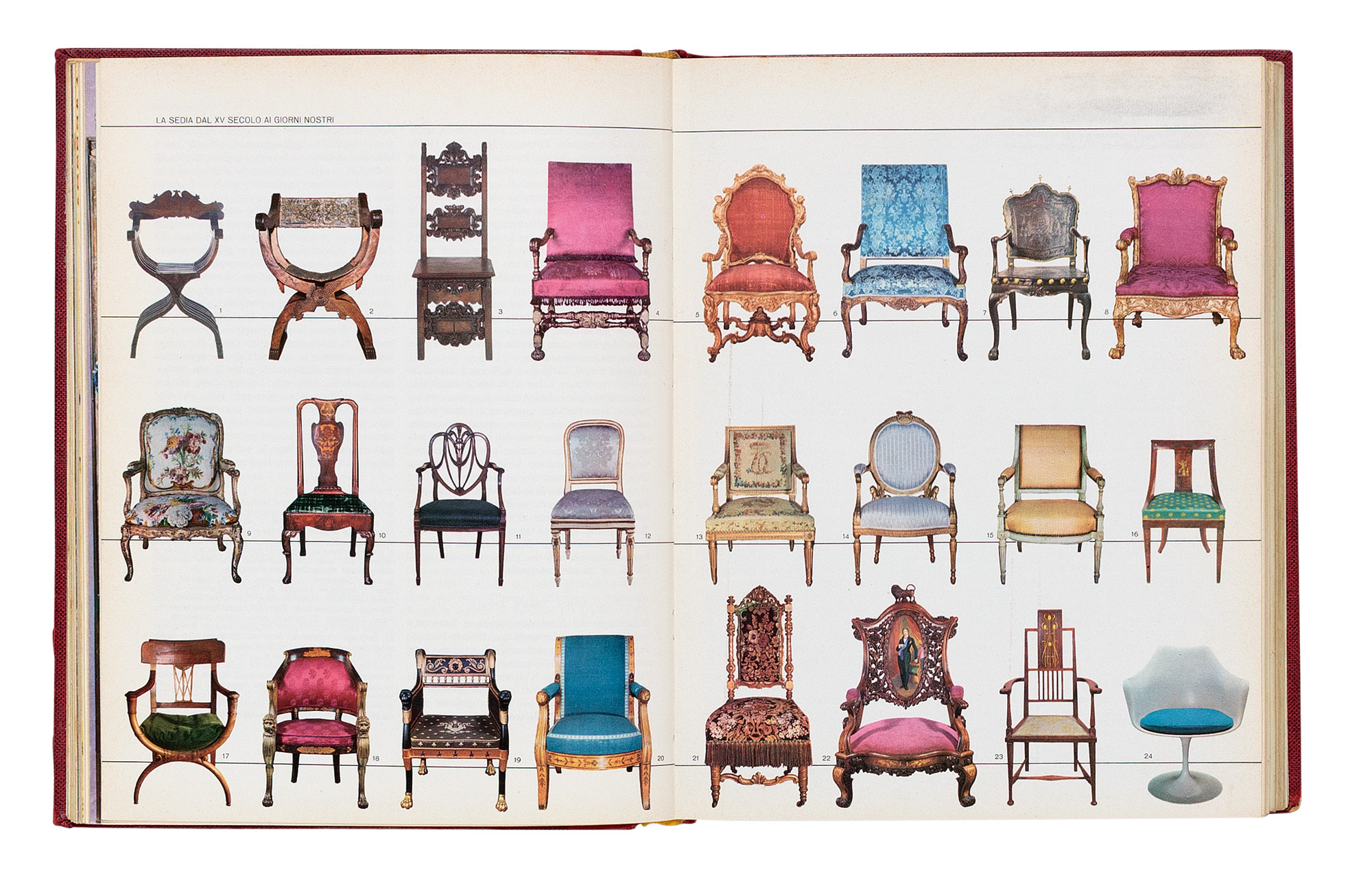
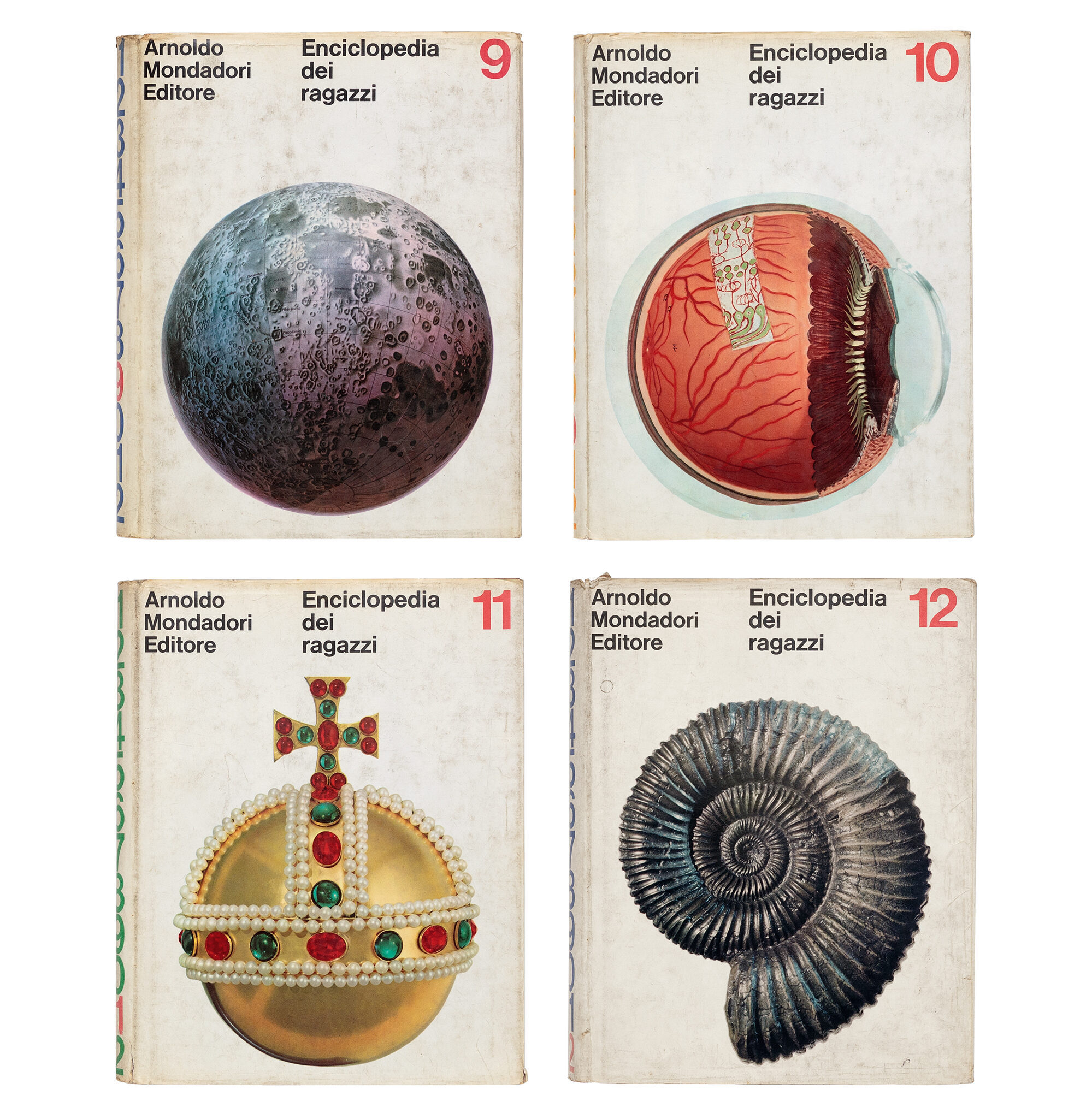
In the period 1964-65 her team worked on 253 new titles and 157 reprints for Arnoldo Mondadori and 71 new titles and nine reprints for il Saggiatore, plus the joint editions, promotional material, advertising and fairs, including stands and other materials. Then there were ‘special’ activities like La Divina Commedia illustrated by Renato Guttuso and three years of work to prepare the Enciclopedia dei ragazzi – twelve volumes with ten thousand illustrations (photos and drawings) almost all made by a team led by Klinz and Peter Gogel. This earned Klinz a gold medal at the Leipzig book fair awards followed by prizes in London and Edinburgh.
Il Saggiatore came to a swift end in 1969. It was wound up and all the staff, including Klinz, received a letter terminating their contracts. In 1970. Klinz went back to Mondadori, first as an external consultant and then she was rehired as art director, but Italian publishing was changing. Arnoldo Mondadori died in 1971; Alberto in 1976. For Klinz it was a second chance to design magazines. From 1970 to 1976 she was art director of Duepiù, the first Italian glossy magazine to speak freely and secularly of sex education and parental relationships. The title would provide a valuable training ground for many journalists and photographers, including Oliviero Toscani and Will McBride.
Klinz started working for Grazia in 1974, but resigned in 1976 after some disagreements with editorial director Andreina Valli.
Volumes in the series ‘Maestri dell’architettura contemporanea’ [‘Masters of Contemporary Architecture’], il Saggiatore, 1960-64. Cover and dust jacket by Anita Klinz.
The following year she was invited by the Giorgio Mondadori Venetian dailies’ editorial team to design a new local daily, Il Mattino di Padua, and to redesign Il Giornale di Bergamo, where she relished the chance to design and try out hundreds of page-setting modules to guarantee their interchangeability and fluidity in day-to-day page make-up. Yet her health began to decline.
Her final project in 1985 was a Giorgio Mondadori project – a new title called F, for Fascination. Her notes reveal some cutting comments about women’s magazines.
‘The … cover is fundamental … it should be a female face. We’re aiming at distinct, yes feminine but elegant (or aspiringly elegant) women, stylish and characterful women; positive, self-assured and conscious of their “charm”, serene but not silly. As I see it, the eyes are incredibly important: they have to look straight into the eyes of the passer-by and convey the right message. Not malicious, “male” promises, but making it understood that there’s “someone” behind that gaze and that you want to find out “who”. […] A real magazine for the women I’ve described; made with great commitment, grace and love. I think that the public always realises when a product is well made, is made for the reader, with modesty and “respect”.’
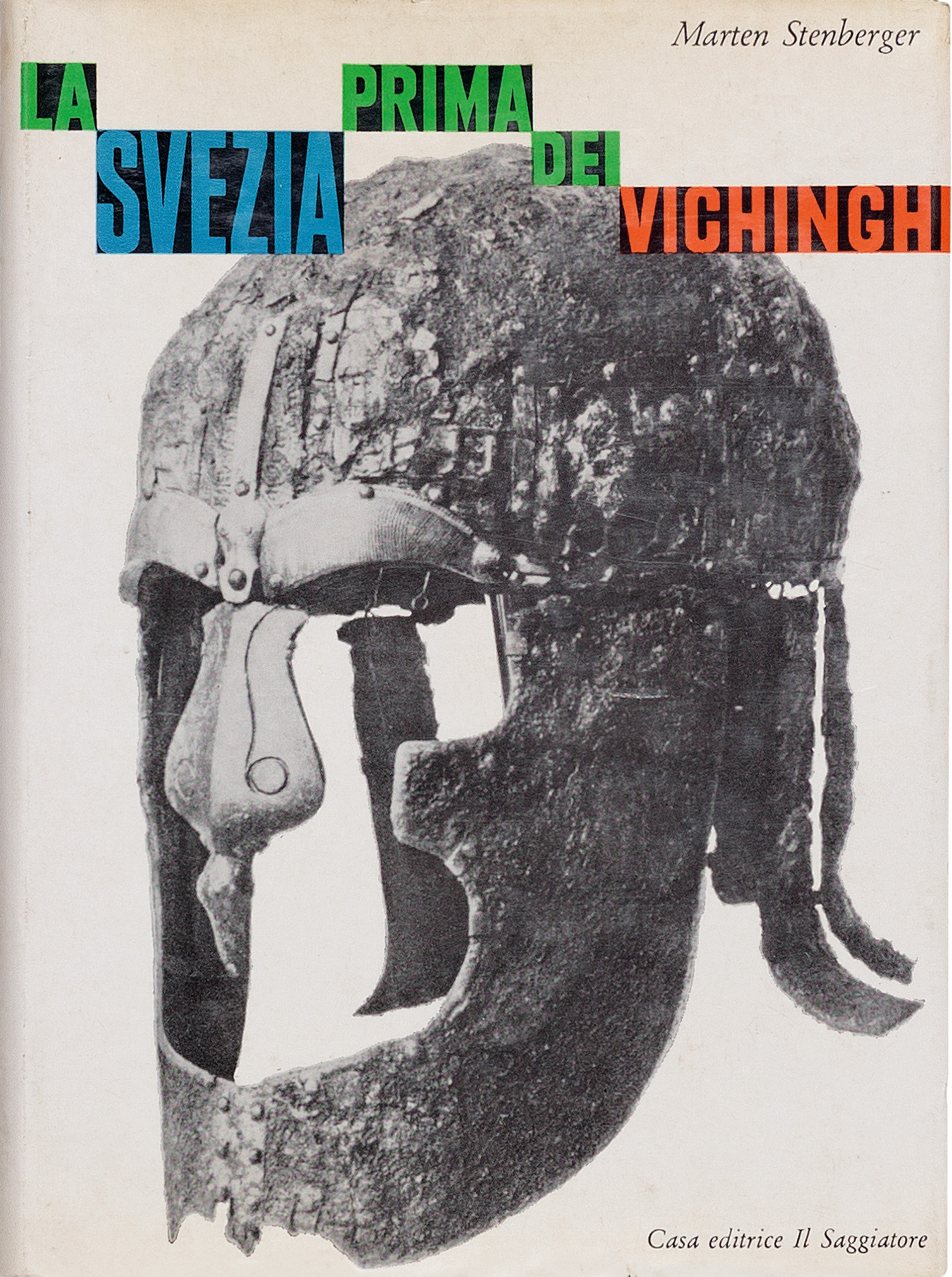
Volumes in the series ‘Uomo e Mito’ [‘Man and Myth’], il Saggiatore, 1958-78. A huge, reputable series about history and archaeology, for which Klinz managed to experiment in a free, almost ‘pop’ manner, making a serious subject attractive to the general audience.
Klinz was direct and incisive, determined to make a high-quality product. Despite this, and after an extremely long gestation period, the project was unexpectedly cancelled in March 1986.
Her work from those twenty years of activity at Mondadori are undeniable proof of a unique contribution, an unparalleled figure in design. Her path may have been solitary, with few close relationships in an almost totally male environment, but above all it was a path that had to be ‘invented’.
Klinz possessed organisational skills, a clear vision and the fundamental idea that books, with their overwhelming physicality, were first and foremost an object. After a long retirement, she died in 2013.
Luca Pitoni, editorial designer, writer, Tomo Tomo, Milan
First published in Eye no. 106 vol. 27, 2024
Eye is the world’s most beautiful and collectable graphic design journal, published for professional designers, students and anyone interested in critical, informed writing about graphic design and visual culture. It is available from all good design bookshops and online at the Eye shop, where you can buy subscriptions and single issues.