
Winter 2026
Reputations: Veronika Burian
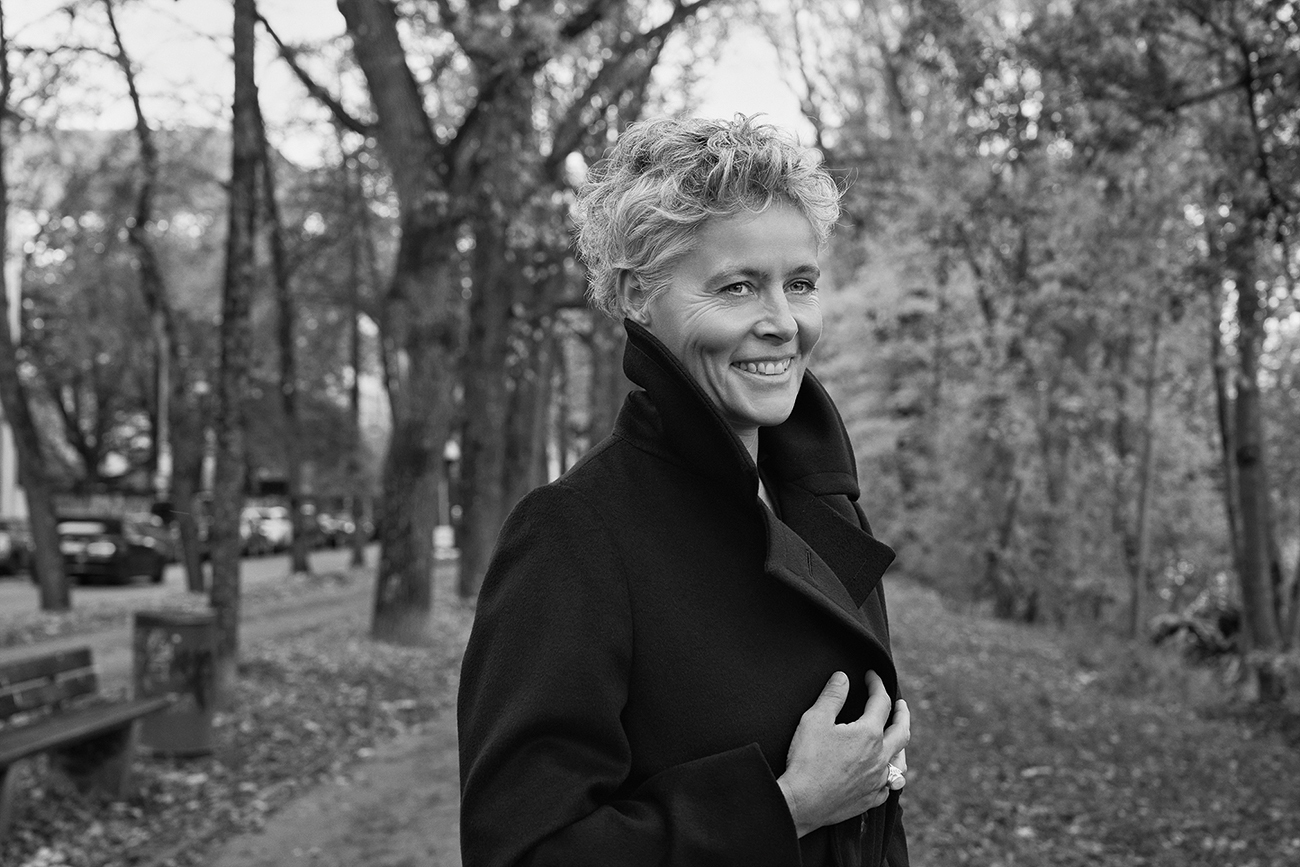
‘How much can we simplify the shapes without losing clarity, legibility and cultural acceptance?’ Amy Papaelias interviews the co-founder of TypeTogether. Portrait by Suki Dhanda
Veronika Burian is not afraid of complexity. Born in Prague in 1973, she grew up in Germany and studied industrial design in Munich. After several years working as a product designer, she then graduated from the MA Type Design programme at the University of Reading in 2003. Her graduation project, the typeface Maiola, was inspired by the work of Czech type designer and calligrapher, Oldřich Menhart, and received a 2004 TDC Certificate of Excellence in Type Design. Burian then moved to London to join Dalton Maag as a type designer where she worked primarily on custom type projects. In 2006, she and her Argentinian-based creative partner José Scaglione started TypeTogether.
What began as a late-night side project via email has evolved into a global type foundry, spanning many countries, languages and writing systems. Its annual Gerard Unger Scholarship selects one up-and-coming type designer to develop a project with guidance from TypeTogether. This has resulted in the release of many innovative typefaces, including Roxane Gataud’s Bely in 2016 and Anya Danilova’s Rezak in 2022.
For Burian, type is a tool in its most basic sense; with her background in industrial design, she is drawn to function and usability. Yet Burian and Scaglione actively take on projects that challenge expectations and embrace new technologies. They were early adopters of web fonts; typefaces like Adelle and Bree worked naturally in the web environment and ushered in a new generation of web-friendly workhorse typefaces. Recently, they have initiated Primarium, an extensive research project on handwriting education around the world, resulting in an interactive website, book, an exhibition and Playwrite, a suite of open-source handwriting fonts.
From her home office in the Tarragona region of Spain, Burian shared some of TypeTogether’s history, the importance of mentoring, the lasting influence of Gerard Unger, and what has made TypeTogether’s unique, collaborative processes sustainable over two decades.
What was your first awareness of type and letterforms? When did you realise this was a practice and profession that you could pursue?
At my elementary school in Germany, I remember the Lesekasten, a didactic tool to learn reading with individual plastic letters that you’d line up to spell words. I have a very vivid memory of this thing, and that I really liked placing and playing with the letters. Funnily enough, I don’t remember how I was taught cursive handwriting. In my last two years of high school [Gymnasium], I focused on English and art as my main subjects. For my final project, I explored letterforms in different ways – for example creating a landscape out of clay.
During my industrial design degree programme, we were obliged to take a calligraphy course but I found it quite difficult (as a left-handed person) and not inspiring. All those practice sheets and repeating lines didn’t suit me at all. During my time in Milan I got exposed to typography and type design through a friend, Andrea Braccaloni from the graphic design studio Leftloft. I completely fell in love with it because it brought together both the functional and the creative sides of my brain. That’s when I thought, maybe this is something I could really do. I discovered the University of Reading’s type design programme – and the rest is history …
Amy Papaelias design educator, writer, New York
Read the full version in Eye no. 109 vol. 28, 2025
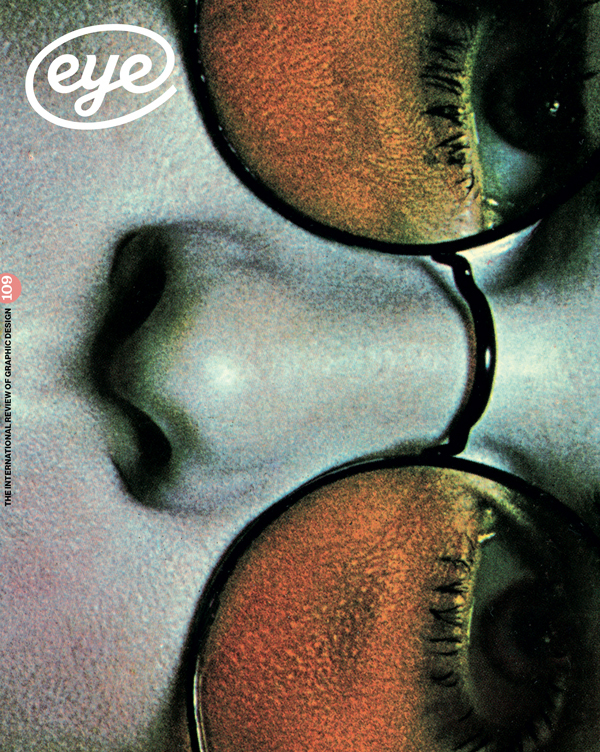
Eye is the world’s most beautiful and collectable graphic design journal, published for professional designers, students and anyone interested in critical, informed writing about graphic design and visual culture. It is available from all good design bookshops and online at the Eye shop, where you can buy subscriptions and single issues.