
Feature: Typography
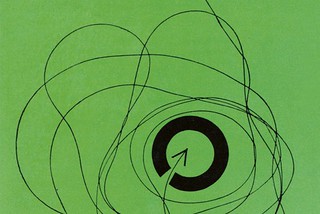
Penguin crime
Romek Marber’s 1960s paperback identity is a landmark of independent British design

Reputations: Jean Widmer
‘Signage reflects both the complexity of space and the way a place is organised. And it is very satisfying’
Why Helvetica?
Despite the changes provoked by the digital ‘revolution’, designing a typeface for serious reading remains a time-consuming task. For the designer, choosing and setting a body text font can be equally daunting, resulting in some inspired, eccentric and provocative choices
The image as evidence
The career of Germano Facetti is exceptional in its range. As art director of Penguin Book covers in the 1960s and as a designer, he was a powerful influence on book and information design, throwing a special light on Modern Movement aspirations and on attitudes to illustration. Facetti has maintained the concept of “documentary” and diagrammatic illustration to induce understanding, to express emotion, or to accumulate information in a more memorable way.
Dr Leslie’s type clinic
Through its publications and gallery, the Composing Room promoted the new American design
Mr Roughcut
or: how graphic designer Pablo Ferro learned to split the screen, cut the crap and tell the story (in the time it took to run the titles)
Revolutionary language
“A revolutionary graphic language must seek to expose the meaning by presenting a chain of ideas, images, structures in as much of their complexity as is economically feasible.” Robin Fior in The Designer, journal of the society of industrial artists and designers, London, May 1972.
The work must be read
Lawrence Weiner’s art is a kind of sculpture made of language, free from excess or embellishment and strangely familiar from its far-reaching influence on graphic designers
A New York state of mind
The design of The New Yorker has nearly always taken the approach that ‘if it ain’t broke, don’t fix it’, with a familiar layout and masthead. Does a face-lift jeopardise its relationship with its readers? Time to call in the Type Police
Compare and contrast
With a CD-ROM based on its legendary lettering archive, Central Saint Martins has created a new tool and resource